
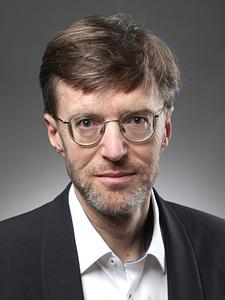
Jan Skaloud
+41 21 693 27 53
Office:
GC C2 397
EPFL › VPA › VPA-AVP-DLE › AVP-DLE-EDOC › EDCE-ENS
Expertise
Mission
Books / Monographs
Editorial
Awards
Samuel Gamble Award, carrier contribution in photogrammetry & sensing
International Society for Photogrammetry and Remote Sensing
2021
big U.V. Helava Award - best paper in J ISPRS over 2016-2019 period
International Society for Photogrammetry and Remote Sensing
2020
Best Demo Award - 4th IEEE International Workshop on Metrology & Aerospace
IEEE
2017
Hansa Luftbild Award - best-paper of the year in PFG journal
PFG Journal
2014
Karl Kraus Medal - best textbook in Photogrammetry, Remote Sensing and GIS
International Society for Photogrammetry and Remote Sensing
2012
GNSS Leader to Watch - Innovation Award
GPS World journal
2009
Infoscience
Teaching & PhD
PhD Students
Aurélien Arnaud Brun, Antoine Paul Carreaud, Simon Gilgien, Jesse Ray Murray Lahaye, Nicola Antonio Santacroce
Past EPFL PhD Students
Philipp Clausen (2019), Emmanuel Clédat (2020), Omar Garcia Crespillo (2022), Kenneth Joseph Paul (2025), Mehran Khaghani (2018), Gabriel François Laupré (2023), Pasquale Longobardi (2024), Kyriaki Mouzakidou (2025), Martin Rehak (2017), Philipp Schär (2010), Aman Sharma (2024), Yannick Stebler (2013), Adrian Wägli (2009)
Past EPFL PhD Students as codirector
Courses
Estimation methods
ENG-267
The students treat observations affected by uncertainty in a rigorous manner. They master the main methods to adjust measurements and to estimate parameters. They apply specific models to real-world problems encountered in various experimental sciences.
Inference for large-scale time series with application to sensor fusion
CIVIL-606
Large-scale time series analysis is performed by a new statistical tool that is superior to other estimators of complex state-space models. The identified stochastic dependences can be used for sensor fusion by Bayesian (e.g. Kalman) filtering or for studying changes in natural/biological phenomena.
Robotics practicals
MICRO-453
The goal of this lab series is to practice the various theoretical frameworks acquired in the courses on a variety of robots, ranging from industrial robots to autonomous mobile robots, to robotic devices, all the way to interactive robots.
Sensing and spatial modeling for earth observation
ENV-408
Students get acquainted with the process of mapping from images (orthophoto and DEM), as well as with methods for monitoring the Earth surface using remotely sensed data. Methods will span from machine learning to geostatistics and model the spatiotemporal variability of processes.
Sensor orientation
ENV-548
Determination of spatial orientation (i.e. position, velocity, attitude) via integration of inertial sensors with satellite positioning. Prerequisite for applications related to remote sensing, environmental monitoring, mobile mapping, robotics, space exploration, smart-phone navigation, etc.