
Maria Giulia Preti
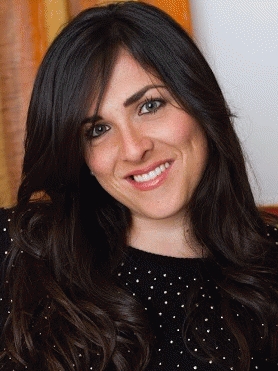
Citizenship: Italian
EPFL CIBM-SP
CH F0 622 (Bâtiment CH)
Station 6
1015 Lausanne
EPFL > VPA-AVP-CP > CIBM > CIBM-SP
Web site: Web site: https://www.cibm.ch/
EPFL STI IBI-STI MIPLAB
H4 3 228.084 (Campus Biotech batiment H4)
Ch. des Mines 9
1202 Genève
Office:
H4 3 182.084
EPFL
>
STI
>
INX-STI
>
MIPLAB
Web site: Web site: https://miplab.epfl.ch/
Biography
Maria Giulia Preti is a Research Staff Scientist at the CIBM Center for Biomedical Imaging (Switzerland) and a Lecturer (Maître-Assistante) at the University of Geneva. She is part of Dimitri Van De Ville's group at EPFL, which she joined in 2013 as a post-doc. She received her Ph.D. in Bioengineering at Politecnico di Milano (Milan, Italy) in 2013, after her M. Sc. (2009) and B. Sc. (2007) in Biomedical Engineering, as well at Politecnico di Milano. During her Ph.D., she focused on advanced techniques of brain magnetic resonance imaging, in particular she developed a method of groupwise fMRI-guided tractography, that revealed useful in the in-vivo investigation of the pathophysiological changes across the evolution of Alzheimers disease. In 2011, she was awarded a Progetto Rocca fellowship from MIT-Italy and spent a visiting research period at the MIT and Harvard Medical School (Boston, USA), under the supervision of Prof. Nikos Makris, where she could focus on the anatomical study of specific neruonal bundles.Her current research aims at investigating the relationship between brain function and structure by using advanced techniques of magnetic resonance imaging and graph signal processing methods. In particular, she is working on functional MRI, functional connectivity, diffusion tensor imaging and tractography, integration of MRI with other techniques (e.g. EEG), and the application of these methods to several clinical contexts, e.g., epilepsy, Alzheimer's disease and mild cognitive impairment, multiple sclerosis, attention deficit hyperactivity disorder, stroke.