
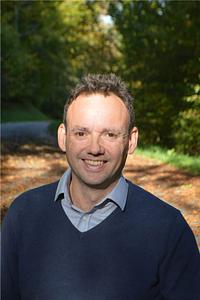
Jonathan Graves
EPFL SB SPC-TH
PPB 114 (Bâtiment PPB)
Station 13
1015 Lausanne
+41 21 693 65 45
Office:
PPB 114
EPFL › SB › SPC › SPC-TH
Website: https://spc.epfl.ch/
+41 21 693 65 45
EPFL › SB › SB-SPH › SPH-ENS
Website: https://sph.epfl.ch/
+41 21 693 65 45
EPFL › VPA › VPA-AVP-DLE › AVP-DLE-EDOC › EDPY-GE
Website: https://go.epfl.ch/phd-edpy
Expertise
Research and Teaching in the field of Magnetic Fusion and Plasma physics
External international positions and roles:
Chair of Magnetic Confinement Fusion Plasmas University of York
Editor-in-Chief of Plasma Physics and Controlled Fusion
Director of Varenna-Lausanne Theory Conference
Research Interests
Graves j.
Publications from infoscience
Research
Research
Teaching & PhD
PhD Students
Erol Balkovic, Lili Édes, Joachim Jacques Koerfer, Régine Gaju Musaby, Guillaume Raphäel Hervé Van Parys, Jorge Paz-Peñuelas Olivan, Chizhou Wang
Past EPFL PhD Students
Antoine Baillod (2023), Daniele Brunetti (2015), Guillermo Bustos Ramirez (2023), Margot Marion Yannick Coste-Sarguet (2026), Jonathan Marc Philippe Faustin (2017), Fabien Nicolas Jeanquartier (2026), Andreas Kleiner (2019), Samuel Lanthaler (2020), Eduardo José Lascas Neto (2022), Mike Machielsen (2023), Hamish William Patten (2019), Madhusudan Raghunathan (2018)
Past EPFL PhD Students as codirector
Mattia Albergante (2011), Martin Jucker (2010), David Pfefferlé (2015)
Courses
Magnetic confinement
PHYS-731
To provide an overview of the fundamentals of magnetic confinement (MC) of plasmas for fusion.The different MC configurations are presented, with a description of their operating regimes.The basic elements of particle & energy transport, of plasma-wall interaction & of burning plasma are introduced.
Plasma instabilities
PHYS-736
To complete the theoretical knowledge acquired before the graduate studies.