
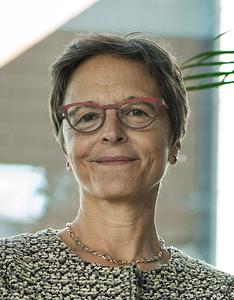
Carmen Sandi

Nationality: Swiss and Spanish

EPFL SV BMI LGC
SV 2810 (Bâtiment SV)
Station 19
1015 Lausanne

Current work

RESEARCH INTERESTS: Our lab investigates the impact and mechanisms whereby stress affects brain function and cognition, with a focus on learning and memory processes, social behaviors and psychiatric disorders - such as anxiety, depression and pathological aggression. Over the past years, we have worked on the development of an integrative overview of how stress impacts learning and memory and characterized key mediating mechanisms (glucocorticoids, cell adhesion molecules, glutamate receptors). We have also identified key mechanisms connecting stress and psychopathology, and studied the modulatory role of anxiety trait. Currently, our lab focuses efforts in the understanding of how stress affects the social brain. Since stress is an important modulator of brain structure and function, one research line in the lab studies the involvement of synapse-associated cell adhesion molecules (neuroligins, nectins) in the mechanisms that translate stress effects on altered social behaviors. We are also interested in identifying the mechanisms that lead from early life exposure to traumatic stress to the development of violent behaviors, including changes in neurodevelopmental trajectories and epigenetic mechanisms involved in epigenetic transmission. Another main project in the lab addresses the impact of stress and anxiety trait in the development of social hierarchies, with a focus on the role of social neuropeptides (oxytocin and vasopressin), the mesolimbic system, and cellular metabolism. These animal studies are currently being complemented by approaches in humans in the emerging field of behavioral and neural economics.
ACADEMIC POSITION: Professor, Director of the Laboratory of Behavioral Genetics, Brain Mind Institute, Ecole Polytechnique Federale de Lausanne (EPFL), Switzerland. EDUCATION: • BS MS Salamanca, Spain, 1984 • PhD Cajal Institute, CSIC, and University Autonoma of Madrid, Spain, 1988 PROFESSIONAL EXPERIENCE: • Postdoc at INSERM, Bordeaux, France, and Cajal Institute Madrid, Spain, 1989-1990 • Postdoc at the Open University, UK, 1991-1992, 1996 • Research Associate, Cajal Institute, CSIC, Madrid, 1993-1995 • Associate Professor Tenured, UNED University, Madrid, 1996-2003 • Sabbatical Professor, University of Bern, Switzerland, 2002-2003 • Assistant Professor Tenure-Track, EPFL, 2003-2007 • Associate Professor Tenured, EPFL, 2007-2012 • Full Professor, EPFL, 2012- • Director, Brain Mind Institute, EPFL, 2012- PRINCIPAL BOARDS: • President, European Brain and Behavior Society (EBBS), 2009-2012 • Editor-in-Chief «Frontiers in Behavioral Neuroscience» • Member of Scientific Advisory Panel, European College Neuropsychopharmacology (ECNP) • Member of the European Dana Alliance for the Brain (EDAB) • Associate Editor «Frontiers in Neuroscience» • Editorial Board Member «Neurobiology of Learning and Memory» • Editorial Board Member «Journal of Psychiatry Research» • Editorial Board Member «Stress» • Editorial Board Member «Biology of Mood and Anxiety Disorders» • Editorial Board Member «Neuroscience and Biobehavioral Reviews»

Awards

Valkhof Chair

0

Appointed president of Federation of European Neuroscience Societies (FENS)

Federation of European Neuroscience Societies (FENS)

2018

Scott Award

International Society for Research on Aggression (ISRA)

2022

Ron de Kloet award from the STRESS-NL consortium

2018

Teaching & PhD

Past EPFL PhD Students

Kamila Markram, Thomas Brionne, Reto Bisaz, Gediminas Luksys, Basira Salehi, Marjan Timmer, Jorge Eduardo Castro Cifuentes, Vandana Veenit, Stamatina Tzanoulinou, Laura Lozano Montes, Sophie Elizabeth Walker, Aurélie Lattion, Alina Veronika Irene Strasser, Damien Huzard, Leyla Loued-Khenissi, Silvia Monari, Jun Huang, Arthur Barakat, Alessandro Chioino, Loredana Cumpana

Courses

Neuroscience: behavior and cognition

BIO-483

The goal is to guide students into the essential topics of Behavioral and Cognitive Neuroscience. The challenge for the student in this course is to integrate the diverse knowledge acquired from those levels of analysis into a more or less coherent understanding of brain structure and function.