
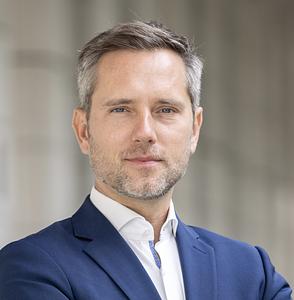
Mirko Kovac

EPFL ENAC IIE LSR
GR B2 392 (Bâtiment GR)
Station 2
1015 Lausanne

EPFL ENAC IIE LSR
GR B2 392 (Bâtiment GR)
Station 2
1015 Lausanne

EPFL ENAC IIE LSR
GR B2 392 (Bâtiment GR)
Station 2
1015 Lausanne

Prof. Mirko Kovač is Director of the Laboratory of Sustainability Robotics, jointly appointed at the Swiss Federal Laboratories for Materials Science and Technology (Empa) in Zürich and the Swiss Federal Institute of Technology Lausanne (EPFL). He holds an Honorary Professorship at Imperial College London, where he previously served as Full Professor and founded the Aerial Robotics Laboratory.

His research group develops mobile robotic systems for distributed environmental sensing and autonomous manufacturing in complex natural environments, with particular expertise in bioinspired robot design, multifunctional hardware development, and multimodal locomotion. His work spans the full arc from fundamental design principles to field-deployed systems and deep-tech startups, with active collaborations across environmental science, materials research, and autonomous systems.

Having received his undergraduate degree in Mechanical Engineering from ETH Zürich (2005), Prof. Kovač completed his doctoral training at EPFL and postdoctoral research at Harvard University. His research has been published in more than 120 peer-reviewed papers in leading journals and venues, including Nature, Science, Science Robotics, Nature Portfolio journals, and IEEE flagship conferences, and has been recognised with multiple best paper awards. He has delivered over 150 keynote and invited lectures worldwide and serves on the editorial boards of npj Robotics (Nature Portfolio), Advanced Intelligent Systems, Advanced Robotics Research, and Frontiers in Robotics and AI. He advises governments, investment funds, and industry on the strategic development of robotics and autonomous systems.

Enseignement et PhD

Doctorant·es actuel·les

Ryo Kanno, Jung Hwan Ro, Yusuf Furkan Kaya

Cours

Sustainability robotics

ENV-530

L'objectif de ce cours est de fournir des méthodes et des outils de robotique pour promouvoir le développement durable. Le cours est un équilibre entre les bases théoriques de la robotique, les études de cas associées et l'apprentissage par projet.