
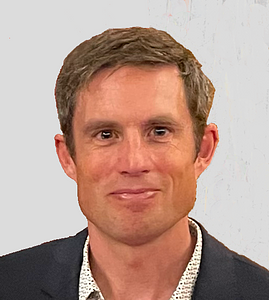
Duncan Alexander
+41 21 693 53 23
EPFL › STI › STI-SMX › SMX-ENS
EPFL SB IPHYS LSME
PH D2 334 (Bâtiment PH)
Station 3
1015 Lausanne
+41 21 693 53 23
Office:
PH D2 334
EPFL › SB › IPHYS › LSME
Website: https://lsme.epfl.ch
+41 21 693 53 23
EPFL › SB › SB-SPH › SPH-ENS
Website: https://sph.epfl.ch/
+41 21 693 53 23
EPFL › VPA › VPA-AVP-DLE › AVP-DLE-EDOC › EDPY-GE
Website: https://go.epfl.ch/phd-edpy
For a complete list of peer-reviewed publications, see:
https://orcid.org/0000-0003-4350-8587
Teaching & PhD
Past EPFL PhD Students as codirector
Arthur Brian Aebersold (2017), Gabrielle Anne Laguisma Sblendorio (2021)
Courses
Electron Matter Interactions in Transmission Electron Microscopy
PHYS-637
This course will present the fundamentals of electronâmatter interactions, as occuring in the energy range available in modern transmission electron microscopes, namely 60-300 keV electrons. Diffraction and high-resolution image formation as well as electron energy-loss spectrometry will be covere
Electron microscopy: advanced methods
MSE-450
With this course, the student will learn about advanced methods in transmission electron microscopy, especially what is the electron optical setup involved in the acquisition, and how to interpret the data. After the course, students will be able to understand and assess TEM encountered in papers.
Fundamentals of crystallography and diffraction
PHYS-477
Crystallography and diffraction are fundamental to much of condensed matter and materials physics research. By developing the relevant formalisms, this course builds a solid basis for utilizing crystallography and diffraction, extending to crystalline phenomena that impact physical properties.