
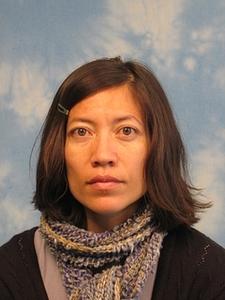
Suliana Manley
EPFL SB IPHYS LEB
BSP 427 (Cubotron UNIL)
Rte de la Sorge
1015 Lausanne
+41 21 693 06 32
Office:
BSP 427
EPFL › SB › IPHYS › LEB
Website: https://leb.epfl.ch
+41 21 693 06 32
EPFL › SB › SB-SPH › SPH-ENS
Website: https://sph.epfl.ch/
+41 21 693 06 32
EPFL › SV › IBI-SV › IBI-SV-GE
Website: https://bioengineering.epfl.ch/
+41 21 693 06 32
EPFL › SB › SB-DEC › SB-CEA
Mission
This is in part a consequence of technical limitations. While the organization and dynamics of membrane proteins are heterogeneous, commonly used fluorescence-based measurements lack information at the molecular scale. In contrast, single molecule measurements limited to looking at only a few molecules in a given cell lack ensemble information. Thus, the study of protein assembly has been limited by a lack of spatially resolved, dynamic information on ensembles of molecules. To overcome these obstacles, we use super-resolution fluorescence imaging techniques combined with live cell imaging and single molecule tracking to determine how the dynamics of protein assembly are coordinated.
POSITIONS AVAILABLE
RECENT PUBLICATIONS
Awards
Medal for Innovation in Light Microscopy by the Royal Microscopy Society
2018
Fellowship to the American Physical Society
American Physical Society
2020
Teaching & PhD
PhD Students
Laila Elfeky, Alara Kiris, Hale-Seda Radoykova, Santiago Nicolás Rodriguez Alvarez
Past EPFL PhD Students
Anna Archetti (2019), Sheda Ben Nejma (2025), Aleksandr Benke (2015), Andrea Callegari (2016), Lina Carlini (2016), Emine Berna Durmus (2026), Julia Gunzenhäuser (2013), Dora Mahecic (2020), Timo Henry René Rey (2021), Jenny Sülzle (2024), Aster Louis K Vanhecke (2019), Julius Winter (2024), Chen Zhang (2024)
Courses
Biophysics : physics of the cell
PHYS-301
In this course we will study the cell (minimum unit of life) and its components. We will study several key cellular features : membranes, genomes, channels and receptors. We will apply the laws of physics to develop models to make quantitative and predictive statements.
Let's experiment
BIOENG-602
Before you step into the lab to do an experiment, you have a long list of questions: How do I design an experiment that will give a clear answer to my question? What model system should I use? What are my controls? What's an ideal sample size? How can I tell if the experiment worked?
Planning your scientific journey (EDBB)
BIOENG-605
Planning Your Scientific Journey: Being successful as a scientist requires more than acquiring knowledge and developing experimental skills. It also requires: (1) asking a good scientific question, (2) establishing a clear plan of action, and (3) seeking advice along the way.
Sharing your research
BIOENG-603
Giving a research talk (say, at a conference, to your department or in your research group meeting) is a really important part of a scientist's career. This course is designed for anyone who will be giving research-based scientific talks in the future.
Topics in biophysics and physical biology
PHYS-466
This course provides exposure to research in biophysics and physical biology, with emphasis on the nature of scientific breakthroughs, and using critical reading of scientific literature. Each week, we will discuss the research of one recipient of the Max Delbruck Prize in Biological Physics.
Writing for science
BIOENG-604
The goal of the course is to develop effective writing skills for academic and professional contexts.