
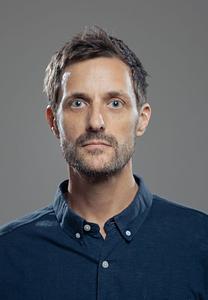
Matias Sendoa de Echanove Perron
Il - He/him
Nationality: Swiss and Spanish
Website: https://lasur.epfl.ch/
Expertise
Participatory planning, urban design, urban systems, AI city
Current Work
Co-Founder at urbz in Geneva, Paris and Mumbai
Matias Echanove is an urbanist and author whose practice spans Europe, Asia and Latin America. His work centres on urban transformation and environmental transition through citizen participation. He has led participatory processes and design workshops in cities including Tokyo, Mumbai, Istanbul and Paris.
He is a lecturer at EPFL and a guest lecturer at Harvard GSD since 2022, and a regular keynote speaker at leading universities and international conferences.
His work has been exhibited at the MoMA (NY), the M+ Museum (Hong Kong) and the Maxxi (Rome). His writing has appeared in The New York Times, Oxford University Press and Routledge. His second book, The Homegrown City, co-authored with Rahul Srivastava, was published by Verso, London in January 2026.
He is a lecturer at EPFL and a guest lecturer at Harvard GSD since 2022, and a regular keynote speaker at leading universities and international conferences.
His work has been exhibited at the MoMA (NY), the M+ Museum (Hong Kong) and the Maxxi (Rome). His writing has appeared in The New York Times, Oxford University Press and Routledge. His second book, The Homegrown City, co-authored with Rahul Srivastava, was published by Verso, London in January 2026.
Curriculum vitae
Education
Information Systems
|
2004 – 2008
University of Tokyo
Directed by
Yoshimi Shunya
Urban Planning
|
2000 – 2003
Columbia University
Directed by
Peter Marcuse; Susan Fainstein
Government and Economics
|1997 – 2000 London School of Economics and Political Science
Teaching & PhD
Courses
International Geneva: An urban system in crisis
PENS-325
This course explores the challenges facing Geneva's international ecosystem in the context of declining multilateralism and reduced U.S. support. Using the concept of the urban system, students analyze how political shifts impact institutions, real estate, and territorial structures.