
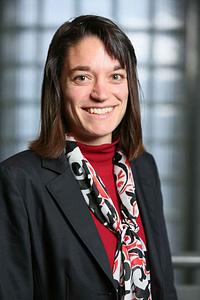
Esther Amstad
EPFL STI IMX SMAL
MXC 230 (Bâtiment MXC)
Station 12
1015 Lausanne
+41 21 693 29 58
+41 21 693 26 83
Office:
MXC 230
EPFL › STI › IMX › SMAL
Website: https://smal.epfl.ch/
+41 21 693 29 58
Office:
MXC 230
EPFL › VPA › VPA-AVP-DLE › AVP-DLE-EDOC › EDMX-GE
Website: https://go.epfl.ch/phd-edmx
+41 21 693 29 58
Office:
MXC 230
EPFL › VPA › VPA-AVP-DLE › AVP-DLE-EDOC › CDOCT
+41 21 693 29 58
Office:
MXC 230
EPFL › VPA › VPA-AVP-DLE › AVP-DLE-EDOC › EDMX-ENS
Professionals experiences
PhD student
Postdoctoral fellow
Tenure Track Assistant Professor
Teaching & PhD
PhD Students
Umut Altuntas, Greta Cocchi, Gaia Dupont, Rocio Garcia Montero, Marc Elies Grädel, Harsha Koganti, Brian David Ridenour, Louisa Rinaldi, François Raphaël Rivat, Zoubeir Saraw, Robin Michel Studer, Reece Carolann Whatmore
Past EPFL PhD Students
Gaia De Angelis (2024), Efe Armagan (2021), Eva Jeanne Baur (2025), Francesca Bono (2025), Alvaro Lino Boris Charlet (2022), Huachuan Du (2019), Gianluca Etienne (2019), Matteo Hirsch (2023), Michael David Kessler (2022), Chuen-Ru Li (2023), Lorenzo Lucherini (2025), Aysu Ceren Okur (2022), Pauline Camille Charlotte Pradal (2024), Mathias Steinacher (2021), Alexandra Thoma (2024), Antoine Claude Jean Vian (2018), Tianyu Yuan (2025), Ran Zhao (2024)
Courses
IMX Colloquium (autumn)
MSE-470(a)
A series of seminars on selected current and emerging topics in Materials will be presented by experts.
Soft matter
MSE-425
The first part of the course is devoted to the self-assembly of molecules. In the second part we discuss basic physical chemical principles of polymers in solutions, at interfaces, and in bulk. Finally, we look at colloids and emulsions.