
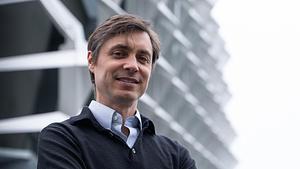
Gaspard Pardon
+41 21 693 83 10
EPFL › SV › SV-SSV › SSV-ENS
Website: https://sv.epfl.ch/education
Expertise
Bioengineering, organoids, hiPSC, biomaterials, microphysiological systems, microfluidics
Mission
As Head of the Bioengineering and Organoids Technology platform at AGORA Cancer Research Center, Gaspard aims to foster and support cross-disciplinary collaborations centered around bioengineering and organoids technology with researchers from the partner institutions: CHUV, HUG, UNIL, EPFL, UniGe, Ludwig Cancer Research Center and ISREC, as well as with industrial partners in the biotech and pharma industry.
Current Work
In the Bioengineering and Organoids technology platform, we currently support and collaborate with researcher from the affiliated institutions to the AGORA, working on multiple organoid model, healthy and cancer, human and animal, tissue engineering, organ-on-chips, microfluidics and assay development, notably live imaging screening.
Dr. Gaspard Pardon graduated with a MSc in Microengineering from EPFL in 2008, followed with a PhD in Electrical Engineering from KTH Royal Institute of Technology in Stockholm, Sweden. His graduate research focussed on the engineering of novel micro- and nanofluidic devices for rapid Point-of-Care diagnostics of infectious diseases, including the detection of airborne pathogens.
In 2016, Gaspard moved as a postdoc to Stanford University, where he developed novel in vitro cardiac models, a.k.a. microphysiological systems, using cardiac cells differentiated from human induced pluripotent stem cells. He focussed his research and technological developments on the study of genetic cardiomyopathies, including Duchenne Muscular Dystrophy. Using his model, he showed the role of stiffness in the loss of contractile function and premature aging in cardiomyocytes due to cell-division independent stress-induced telomere shortening.
Since March 2021, Gaspard joined EPFL to establish the Bioengineering and Organoids Technology platform at the AGORA Cancer Research Center in Lausanne. The platform aims to provide infrastructure and support to the community in the development, deployment and translation of bioengineering and organoids technologies and to foster and support cross-disciplinary collaborations centered around bioengineering and organoids technology with researchers from the partner institutions: CHUV, HUG, UNIL, EPFL, UniGe, Ludwig Cancer Research Center and ISREC, as well as with industrial partners in the biotech and pharma industry.
In 2016, Gaspard moved as a postdoc to Stanford University, where he developed novel in vitro cardiac models, a.k.a. microphysiological systems, using cardiac cells differentiated from human induced pluripotent stem cells. He focussed his research and technological developments on the study of genetic cardiomyopathies, including Duchenne Muscular Dystrophy. Using his model, he showed the role of stiffness in the loss of contractile function and premature aging in cardiomyocytes due to cell-division independent stress-induced telomere shortening.
Since March 2021, Gaspard joined EPFL to establish the Bioengineering and Organoids Technology platform at the AGORA Cancer Research Center in Lausanne. The platform aims to provide infrastructure and support to the community in the development, deployment and translation of bioengineering and organoids technologies and to foster and support cross-disciplinary collaborations centered around bioengineering and organoids technology with researchers from the partner institutions: CHUV, HUG, UNIL, EPFL, UniGe, Ludwig Cancer Research Center and ISREC, as well as with industrial partners in the biotech and pharma industry.
Teaching & PhD
Courses
Next-generation biomaterials
BIOENG-458
"Next-Generation Biomaterials" explores the latest advancements in the development and application of cutting-edge biomaterials for medical and healthcare innovation.
Lab immersion I & II and Master thesis project
We are continuously welcoming students to perform Lab immersion I & II and Master thesis projects in the platform.