
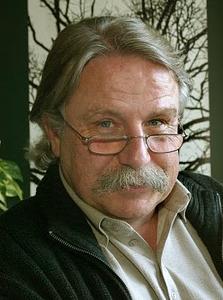
Gérard Gremaud
Nationality: Suisse
Expertise
See:
https://gerardgremaud.ch/
https://www.researchgate.net/profile/G_Gremaud?ev=hdr_xprf
http://mechanical-spectroscopy.epfl.ch/page-71047.html
Expertise
See:
https://gerardgremaud.ch/
https://www.researchgate.net/profile/G_Gremaud?ev=hdr_xprf
http://mechanical-spectroscopy.epfl.ch/page-71047.html
Current work
Universe and Matter Conjectured as a Three-Dimensional Lattice with Topological Singularities
One of the fundamental problems of modern physics is the search for a Theory of Everything, capable of explaining the nature of space-time, what matter is and how matter interacts. There are many proposals, such as the "Grand Unification", Quantum Gravity, Quantum Loop Gravitation, String and Superstring Theories, Supersymmetry and M-Theory. However, none of these approaches is yet capable of consistently explaining electromagnetism, relativity, gravitation, quantum physics and observed elementary particles all at the same time.
By developing a complete theory of solid lattice deformation in Euler coordinates, we find that it can be used to describe the space-time evolution of the Universe, in place of general relativity. In this way, it is suggested that the Universe could be a three-dimensional, elastic and massive lattice, described in absolute space by Euler coordinates, and that the fundamental components of Ordinary Matter could consist of topological singularities of this lattice, namely various loops of dislocation, disclination and dispiration. We thus find that, for an isotropic lattice obeying Newton's law, with very specific elastic properties, the behaviors of this lattice and its topological defects obey "all" known physics. Indeed, this theory of the crystalline ether intrinsically contains and enables direct deduction of the various formalisms of electromagnetism, special relativity, general relativity, gravitation and quantum physics. It also provides simple answers to long-standing questions in modern physics, such as the expansion of the universe, the big bang, dark matter and energy, particle spin and quantum decoherence.
But above all, it introduces a completely new scalar charge, the curvature charge, which has no analogue in modern physics theories, reveals a very slight deviation from Einstein's principle of equivalence between gravitational mass and inertial mass, and provides a simple explanation of the weak asymmetry between matter and antimatter, the origin of the weak interaction force, the formation of galaxies, the disappearance of antimatter from the universe, the formation of gigantic black holes at the heart of galaxies, and the nature of the famous dark matter.
What's more, by describing the crystalline ether in this new version as a face-centered cubic lattice with axial symmetries, we've been able to identify a lattice structure whose looping topological defects coincide perfectly with the complex zoology and behavior of elementary particles, and which enables us to explain physically and quite simply the nature of the weak and strong forces, the existence of three families of particles in the Standard Model and the asymptotic behavior of the strong force.
Gérard Gremaud was born in Fribourg (Switzerland) in 1949. After classical studies at College St Michel in Fribourg, he received his diploma in physics engineering in 1974 and his PhD in 1981 at EPFL. From this date, he became responsible for research at EPFL (Swiss Federal Institute of Technology of Lausanne). He is then co-responsible for the Mechanical Spectroscopy Laboratory at the Institute of Physics of Complex Materials. In 2002, he became also chief of the service of physics teaching laboratories and physics classroom demonstrations of EPFL. In 2005, he obtained the title of Professor of EPFL. From 1976, he was teaching in the fields of acoustics, vibrations, metallurgical physics, thermodynamics, dislocation theory, metrology, physics laboratories, and of basic physics (mechanics, thermodynamics and introduction to quantum physics) and physics demonstrations (see physics show). Since 2012, he is honorary professor of EPFL (see honorary lesson).
He was active in a variety of research fields : dislocation dynamics, structural phase transitions, mechanical and tribological properties at nanoscale, and mechanical properties of vibrated granular materials (mechanical-spectroscopy). In these fields, he has directed about ten PhD thesis. He is the author of numerous theoretical models which are largely cited. Specialized in acoustical spectroscopy techniques, he developped several original experimental techniques, such as the US-LF coupling technique (representative publications). His publications include
123 research papers, 17 book chapters, 6 popular publications, 4 books as editor and 6 books as author (Researchgate), (Academia.edu).
In addition to about 40 invited lectures and conference talks in leading institutions worldwide, he has co-organized several international conferences and summer schools. Member of several scientific societies, he has contributed also as referee for numerous scientific journals and several scientific research funding organisations. He was collaborating also during several years to two small companies in Switzerland, as administrator or president.
In 2011, Gérard Gremaud has been awarded the Zener prize and the Zener gold medal. This distinction recognizes important contributions in the fields of materials science and physics. The award motivation cited: ‘for his study of dislocation dynamics and solid deformations by mechanical spectroscopy' (Zener prize).
Selected publications
The coupling technique: A two wave acoustic method for the study of dislocation dynamics
G. Gremaud, M. Bujard, W. Benoit
Published in J. Appl. Phys., 61, 5, 1795-1805 (1987)
in
Etude à basse fréquence des pics de frottement intérieur associés à une transition de phase du 1er ordre
G. Gremaud, J.-E. Bidaux, W. Benoit
Published in Helv. Phys. Acta, 60, 947-958 (1987) in
Dislocation and kink dynamics in FCC metals studied by mechanical spectroscopy
W. Benoit, G. Gremaud, B. Quenet
Published in Mat. Sc. Eng., A164, 42-57 (1993) in
Characterization of thin films using inversion of generalized Lamb waves
O. Behrend, A. Kulik, G. Gremaud
Published in Appl. Phys. Let., 62 (22), 2787-2789 (1993) in
Nanosubharmonics: The Dynamics of Small Nonlinear Contacts
N. A. Burnham, A. J. Kulik, G. Gremaud, G.A.D. Briggs
Published in Phys. Rev. Let., 74 (25), 5092-5095 (1995) in
Local mechanical spectroscopy with nanometer-scale lateral resolution
F. Oulevey, G. Gremaud, A. Semoroz, A. J. Kulik, N. A. Burnham, E. Dupas, D. Gourdon
Published in Rev. Sci. Instrum. , 69, 5, 2085-2094 (1998) in
Theory of dislocation-solute atom interactions in solid solutions and related non-linear anelasticity
G. Gremaud, S. Kustov
Published in Phys. Rev. B, 60, 13, 9353-9364 (1999) in
Dislocation-point defects interactions
G. Gremaud
Published in In "Mechanical Spectroscopy", chapter 3.3, Materials Science Forum, vol. 366-368, Trans Tech Publications, Switzerland (2001) , p. 178-247 in
The jamming route to the glass-state in weakly perturbed granular media
G. D'Anna, G. Gremaud
Published in Nature, 413, 407-409 (2001) in
Vogel-Fulcher-Tammann Type Diffusive Slowdown in Weakly Perturbed Granular Media
G. D'Anna, G. Gremaud
Published in Phys. Rev. Let., 87, 25, 254302-1-4 (2001) in
Overview on dislocation-point defect interaction: the brownian picture of dislocation motion
G. Gremaud
Published in Mat. Sc. Eng., A370, 191-198 (2004) in
Adhesion hysteris and friction at nanometer and micrometer lengths
R. Szoszkiewicz, B. Bhushan, B. D. Huey, A. J. Kulik, G. Gremaud
Published in J. Appl. Phys., 99, 014310 (2006) in
Non-linear Anelasticity of Topological Vortex Matter in Martensites
S. Kustov, E. Cesari, G. Gremaud
Published in Materials Science and Engineering A, 432 (2006) 390-397 in
Mechanical spectroscopy of vibrated granular matter
P. Mayor, G. D’Anna, G. Gremaud, A. Barrat, V. Loreto
Published in Materials Science and Engineering A, 432 (2006) 256-262 in
Theory of plasticity and anelasticity due to dislocation creep through a multi-scale hierarchy of obstacles
G. Gremaud
Published in Materials Science & Engineering A (2008), doi:10.1016/j.msea.2008.09.131 in
Fractional Brownian motion and anomalous diffusion in vibrated granular materials
Alessandro L Sellerio, Daniele Mari and G´erard Gremaud
Published in J. Stat. Mech. (2012) P01002 in
Friction and Hertzian contact in granular glass
Gianfranco D'Anna, Alessandro Luigi Sellerio,
Daniele Mari and Gérard Gremaud
Published in J. Stat. Mech. (2013) P05009 in
Théorie eulérienne des milieux déformables-Charges de dislocation et désinclinaison dans les solides
G. Gremaud
Published in Presses polytechniques et universitaires romandes, Lausanne 2013, 751 pages, ISBN 978-2-88074-964-4 in
On local space-time of loop topological defects in a newtonian lattice
G. Gremaud
Published in arXiv:1407.1227 [physics.class-ph] in
DE L’ESPACE-TEMPS LOCAL DES DEFAUTS TOPOLOGIQUES EN BOUCLE DANS UN RESEAU NEWTONIEN
G. Gremaud
Published in Lausanne, 7 Jul 2014, traduction française de arXiv:1407.1227 [physics.class-ph] in
Univers et Matière conjecturés comme un Réseau Tridimensionnel avec des Singularités Topologiques
Gérard Gremaud
Published in Amazon, Charleston (USA), 2016, 660 pages, ISBN 978-2-8399-1940-1 in
Eulerian theory of newtonian deformable lattices – dislocation and disclination charges in solids
G. Gremaud
Published in Amazon, Charleston (USA), 2016, 312 pages, ISBN 978-2-8399-1943-2 in
Universe and Matter Conjectured as a 3-Dimensional Lattice with Topological Singularities
Gérard Gremaud
Published in Journal of Modern Physics, 7, 1389-13 in
Maxwell’s equations as a special case of deformation of a solid lattice in Euler’s coordinate
G. Gremaud
Published in arXiv :1610.00753 [physics.gen-ph] in
Research
Books
G. Gremaud, «Théorie eulérienne des milieux déformables & charges de dislocation et désinclinaison
dans les solides», Presses polytechniques et universitaires romandes (PPUR), Lausanne (Switzerland)
2013, 751 pages, ISBN 978-2-88074-964-4
G. Gremaud, «Eulerian theory of newtonian deformable lattices & dislocation and disclination charges
in solids», Amazon, Charleston (USA) 2016, 312 pages, ISBN 978-2-8399-1943-2
G. Gremaud, «Théorie de L'ETHER CRISTALLIN», Livre Amazon broché, ISBN 979-8880376872,
ASIN B0CWVLQ94X, mars 2024, 672 pages
G. Gremaud, «Theory of THE CRYSTALLINE ETHER», Amazon paperback, ISBN 979-8883393982,
ASIN B0CWX9STP1, March 2024, 662 pages
G. Gremaud, «L'ETHER CRISTALLIN», Livre Amazon broché, ISBN 979-8883513656,
ASIN B0CWYGX2X2, mars 2024, 334 pages
G. Gremaud, «THE CRYSTALLINE ETHER», Amazon paperback, ISBN 979-8883536273,
ASIN B0CWYG8ZJ8, March 2024, 318 pages
Teaching & PhD
Codirection of thesis:
Quenet Brigitte,
Richard Philippe,
Progin Olivier,
Oulevey Frédéric
Direction of thesis
Dupas Emmanuel,
Szoszkiewicz Robert,
Mayor Patrick ,
Sellerio Alessandro Luigi