
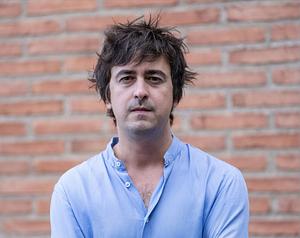
Xavier Nueno
EPFL ENAC IA HITAM
BP 4140 (Bâtiment BP)
Station 16
1015 Lausanne
+41 21 693 62 84
Office:
BP 4143
EPFL › ENAC › IA › HITAM
Site web: https://hitam.epfl.ch
Expertise
History of Knowledge; Architecture History; Media history and theory; Critical Data Studies;
Xavier Nueno (Barcelona, 1990) is a writer and media history researcher. He holds a Ph.D. in Film and Visual Studies from Harvard University. Since January 2024, he has been a post-doctoral researcher at the Laboratory of History and Theories of Architecture, Technology and Media at the Federal Polytechnic School of Lausanne. His dissertation "The Statistical Order of Knowledge. A Social and Intellectual History of Search Engines" (2023) examined the automation of indexing in the second half of the twentieth century. This process is at the center of important debates about how to organize scientific information, how to make language and images operational, or how to evaluate and index the impact of scientific contributions. His research on the origins of the information society is presented in his latest book, El arte del saber ligero. Una breve historia del exceso de información (Ediciones Siruela, 2023; Finalist of Non-Fiction Vanity Fair Prize 2024), where he traces forms of reading and writing practices that originated under the imaginary of an overflowing library in the European tradition between the 14th and 18th centuries. He has also co-authored Napa(s). Persistir en lo inacabado (Ediciones La Bahía, 2017) and Chaque Mercredi Caracas (Edition HS, 2020), a collection of images exploring the relationship between colonialism and mass tourism, which was awarded Les plus beaux livres suisses de l'année 2020. He exhibited the short film As We See (2021) at the Nobel Foundation in Sweden, as well as other editorial and cinematographic projects at the Museum of Contemporary Art in Barcelona, the Museo Nacional Centro de Arte Reina Sofia, the University Museum of Sciences and Arts in Mexico City, and the Los Angeles Art Book Fair.