
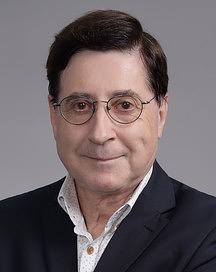
Jean-Claude Bünzli
Nationality: Swiss
Expertise
Rare earth coordination and supramolecular chemistry. Lanthanide spectroscopy. Luminescent bioprobes and materials. Rare earth resources and geopolitics.
Mission
The laboratory of Lanthanide Supramolecular Chemistry (closed in 2010) had two main objectives. - The first, and general, one was to decipher the relationship between luminescent properties and molecular structure of lanthanide-containing coordination compounds and supramolecular edifices. - The second one is to develop luminescent probes for biomedical analyses and cancerous cell/tissue imaging, emitting either in the visible spectral range or in the near infrared.
Current Work
I am currently employed by The Hong Kong Polytechnic University (PolyU) as part-time adjunct professor, where I pursue the goals described under "mission", with, in addition, more emphasis on potential medical applications such as photodynamic treatment of cancer.
I also collaborate with Sun Yat'sen University, Zhuhai Branch (Guangdong province) on the design of inorganic phosphors for while-light emitting diodes, with the University of Technology in Sydney (UTS) on X-ray excited lanthanide luminescence for enhancing the effects of radiotherapy, with Lomonosov University in Moscow on the influence of charge transfer states on lanthanide luminescence, and with the Université de Genève on molecular upconversion and theoretical description of hypersensitive transitions in Lanthanides
I also collaborate with Sun Yat'sen University, Zhuhai Branch (Guangdong province) on the design of inorganic phosphors for while-light emitting diodes, with the University of Technology in Sydney (UTS) on X-ray excited lanthanide luminescence for enhancing the effects of radiotherapy, with Lomonosov University in Moscow on the influence of charge transfer states on lanthanide luminescence, and with the Université de Genève on molecular upconversion and theoretical description of hypersensitive transitions in Lanthanides
Jean-Claude Bünzli was born in 1944. He earned a degree in chemical engineering in 1968 and a PhD in 1971 (Swiss Federal Institute of Technology, Lausanne) for his work on the kinetic behaviour of Nb and Ta pentachloride adducts. He spent two years at the University of British Columbia as a teaching postdoctoral fellow (photoelectron spectroscopy) and one year at the Swiss Federal Institute of Technology in Zürich (physical organic chemistry). Positions He was appointed assistant-professor at the University of Lausanne in 1974 and started a research program on the spectrochemical properties of f-elements. He was promoted as a full professor of inorganic and analytical chemistry in 1980. He transferred to EPFL in 2001 where he directed the Laboratory of Lanthanide Supramolecular Chemistry until 2010. From 2009 to 2013, he was World Class University Professor at Korea University (South Korea) helping developing a new research center for photovoltaics. In 2014-2015 he acted as visiting professor at FJIRSM (Fuzhou, Fujian), a laboratory of the Chinese Academy of Sciences. During 2016-2019 he held the Dr Kennedy Wong Distinguished Visiting Professorship at Hong Kong Baptist University (3 months/year) and a position as Distinguished Scholar at University of Technology, Sydney (NSW, Australia, 1 month/year). He is presently Adjunct professor at Hong Kong Polytechnic University (2023-). Regarding administrative duties, he acted as the elected Dean of the Faculty of Sciences (1990-1991) and as one of the elected Vice-Rectors of the University of Lausanne (1991-1995), in charge of student affairs. He presided the EPFL Research Commission between 2003 and 2008.
Awards
Terrae Rarae
2009