
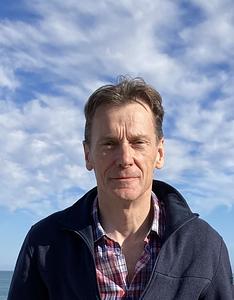
Joachim Lingner

EPFL SV ISREC UPLIN
SV 1824 (Bâtiment SV)
Station 19
1015 Lausanne

Expertise

Telomeres Telomerases Non-coding RNA
Joachim Lingner obtained his PhD (1992) at the Biozentrum of the University of Basel in the laboratory of Walter Keller studying the 3' end formation of messenger RNAs. During his postdoctoral work (1993-1997) with Thomas Cech at the Howard Hughes Medical Institute of the University of Colorado at Boulder, Lingner discovered the catalytic subunit of telomerase (TERT) which counteracts telomere shortening and cellular senescence in cancer cells, stem cells and the germ line. Since 1997, Lingner is group leader at ISREC and since 2005 professor at the EPFL in Lausanne, Switzerland. The Lingner lab studies how telomeres enable chromosome stability and how they are maintained to regulate cellular lifespan. The team elucidated how the telomerase enzyme is regulated at chromosome ends to counteract telomere shortening. The lab also discovered that telomeres are transcribed into long the long noncoding RNA TERRA, which regulates telomeric chromatin structure and telomere maintenance by telomerase and homology directed repair. Finally, the team developed techniques to purify telomeric chromatin and determine its protein composition by mass spectrometry to uncover the changes that occur in the telomeric proteome during aging and disease including cancer. Lingner obtained a START-fellowship from the Swiss National Science Foundation (1997), the Friedrich Miescher prize (2002), an ERC advanced investigator award (2008) and is an elected member of EMBO (2005) and the Academia Europaea (2020).

Teaching & PhD

Past EPFL PhD Students

Katarzyna Sikora, Elena Aritonovska, Andrea Bernardo Panza, Jérôme Crittin, Larissa Grolimund, Alix Christen, Jana Majerská, Aleksandra Vancevska, Patricia Renck Nunes, Anna-Sophia Briod, Anna Christina Näger, Rita Valador Fernandes, Thu Trang Nguyen

Past EPFL PhD Students as codirector

Anika Ekrut, Florence Magnin, Saif Shehata

Courses

Cancer biology I

BIO-471

The course covers in detail molecular mechanisms of cancer development with emphasis on cell cycle control, genome stability, oncogenes, tumor suppressor genes, signaling pathways involved in cancer, genomic cancer analysis and rational cancer therapies.