
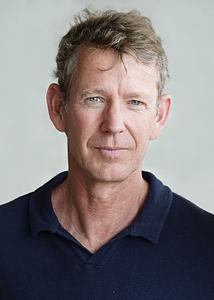
Kay Severin
EPFL SB ISIC LCS
BCH 3307 (Batochime UNIL)
Av. F.-A. Forel 2
1015 Lausanne
+41 21 693 93 02
+41 21 693 93 01
Office:
BCH 3307
EPFL › SB › ISIC › LCS
Website: https://lcs.epfl.ch
+41 21 693 93 02
EPFL › SB › SB-SCGC › SCGC-ENS
Website: https://www.epfl.ch/schools/sb/scgc/
+41 21 693 93 02
EPFL › VPA › VPA-AVP-DLE › AVP-DLE-EDOC › EDCH-GE
Website: https://go.epfl.ch/phd-edch
+41 21 693 93 02
EPFL › SB › SB-DEC › SB-CEA
Awards
ADUC award of the year
2001
Heinz Maier-Leibnitz award
DFG
2001
Arnold Sommerfeld award
Bavarian Academy of Science
2001
Werner Prize
Swiss Chemical Society
2003
Otto Roelen Medal
DECHEMA
2005
chemistry award
Academy of Sciences Göttingen
2007
Dalton Transactions European Lectureship
2008
Infoscience
Teaching & PhD
PhD Students
Damien Wen Chen, Jacob Alexander Gome, Maxim Dominic Hamers, Christeena Mathew, Jean Charles Edouard de Montmollin, Lena Rieder, Dicky Wong, keqiang Wu
Past EPFL PhD Students
Florian Gérald Abela (2018), Cesare Berton (2023), José Luis Bila (2020), Carl Thomas Bormann (2022), Thomas Brasey (2006), Estelle Burri (2006), Andrey Buryak (2007), Giacomo Cecot (2019), Nicolas Christinat (2008), Barnali Dutta (2010), Noga Eren (2026), Léonard Yannick Maurice Eymann (2018), Sébastien Gauthier (2006), Erica Giraldi (2021), Anastasia Gitlina (2024), Zacharias Immanuel Grote (2006), Burçak Içli (2012), Vera Janowski (2012), Suzanne Maria Jansze (2019), Loïc Nicolas Jeanbourquin (2018), Gregor Kiefer (2015), Ziya Köstereli (2015), Iris Roswitha Landman (2022), Bo Ram Lee (2014), Marie-Line Lehaire (2004), Nicolas Luisier (2016), Mathieu Jérémie Marmier (2016), Sebastian Mirtschin (2010), Ophélie Marie Planes (2021), Laurent Quebatte (2005), Julie Risse (2013), Sébastien Rochat (2010), Alexander Schiller (2006), Clément Schouwey (2014), Erin Sheepwash (2012), Sylvain Alexandre Marie Sudan (2024), Abdusalom Suleymanov (2020), Katrin Anne Thommes (2010), Justus Tönnemann (2015), Alexander Tskhovrebov (2014), Paul Varava (2022), Matthew David Wise (2015), Friederike Gundula Marie Zaubitzer (2010)
Courses
Chemistry of elements s and p
CH-221
Introduction to the chemistry of the s & p elements of the periodic table.
Inorganic chemistry "Applications and spin-offs"
CH-711
Present and discuss important recent contributions in the field of inorganic chemistry. This will be achieved by student literature seminars based on selected publications,emanating from the last 12 months. Seminar preceded by an introduction to the topic and followed by a group discussion.
Inorganic chemistry "Fundamentals and properties"
CH-610
To present and discuss important recent contributions in the field of inorganic chemistry with an emphasis on fundamental aspects and properties.Literature seminars based on selected publications,emanating from the last 12 months, preceded by introduction and followed by a group discussion.
Inorganic chemistry "Techniques and methods"
CH-611
To present and discuss important recent contributions in the field of inorganic chemistry incorporating techniques and methods. Student literature seminars based on selected publications,emanating from the last 12 months. Seminar preceded by introduction to the topic followed by group discussion.
Preparative chemistry II
CH-329
Advanced chemistry laboratory Admission to the TP is conditional on the successful completion of 2 of the 3 courses: CH-222 Coordination chemistry, CH-223 Organometallic chemistry, CH-233 Fonctions et réactions organiques
Supramolecular chemistry
CH-424
The course provides an introduction to supramolecular chemistry. In addition, current trends are discussed using recent publications in this area.