
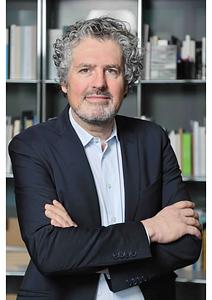
Luca Pattaroni
EPFL ENAC IA LASUR
BP 2239 (Bâtiment BP)
Station 16
1015 Lausanne
+41 21 693 32 43
Office:
BP 2239
EPFL › ENAC › IA › LASUR
Website: https://lasur.epfl.ch/
EPFL ENAC IA LASUR
BP 2239 (Bâtiment BP)
Station 16
1015 Lausanne
+41 21 693 32 43
Office:
BP 2239
EPFL › VPA › VPA-AVP-DLE › AVP-DLE-EDOC › EDAR-ENS
Expertise
- Collective action, social movements and justice (squats, countercultures, urban struggles)
- Urban transition
- Cultural urban policies
- Migration and urban hospitalities
- Use and architecture
- Sociological and political theory
Research Program
Luca Pattaroni is Professor of Urban Sociology EPFL and co-director of the Laboratory of Urban Sociology (LaSUR) of the School of Architecture, Civil and Environmental Engineering (ENAC/EPFL). . He is also the co-responsible of the research committee «Urban Sociology» of the Swiss Sociological Association.
Contributing to the field of Urban Studies, his work addresses the expression of differences and the making of the common in contemporary cities, focusing on the concomitant transformation of lifestyles, institutional settings, and spatial forms. His research explores housing issues, public spaces, urban migration, and cultural and urban movements. In his research, he uses mixed methods to combine measurement and modeling approaches of significant societal transformations with fine-grained and dynamic descriptions of socio-spatial situations, encouraging further dialogue between urban sociology, architecture, and engineering sciences.
Luca Pattaroni is also actively engaged in professional collaborations with architects and urban planners. He regularly participates in international competitions within interdisciplinary teams. Among others, he won in 2021 the First Prize for the milestone renovation of a student housing tower in Paris (Tour des Poissoniers, Paris Habitat/CROUS) as a partner of the consortium led by L'AUC (Grand Prix d'Urbanisme, 2021) and Fagart&Fontana Architects. He is also regularly commissioned as urban issues expert by public authorities. In 2020, he was appointed as a member of the national Think Tank of the Swiss Association of Consulting Engineers (USIC) & Rethink_ing.
Aside from his academic and professional commitments, Luca Pattaroni is very involved in tightening the relationship between academia and urban public life. He makes frequent media contributions and gives numerous public talks. He is also the co-founder and President of the artists and artisans Cooperative Ressources Urbaines, which manages 700 members. He is also vice-president of the Filogie Foundation aiming at the renewal of affordable housing through the experimental development of housing projects.
Academic and Public responsibilities
- Co-responsible for the Housing Orientation of the Master of Architecture, ENAC/EPFL (with Sophie Delhay)
- Member of the SAR Teaching Committee, Section of Architecture, ENAC/EPFL.
- Head of the research committee Urban Sociology, Swiss Sociological Association.
- Liaison Officer, Joint doctoral program Geneva School of Art and Design (HEAD) / Doctoral
- School of Architecture and Sciences of the City (EDAR).
- Scientific Committee, Certificate of Advanced Studies Urban Project and Empowerment,
- Geneva School of Social Work.
Public responsibilities
- Appointed member of Re_thinking, national Think Tank of the Swiss Association of Consulting Engineers (USIC), Switzerland.
- Elected member of the Steering Committee, newspaper Le Courrier, Geneva.
- Appointed member of the Cultural Advisory Council, State of Geneva.
- President and co-founder of Ressources Urbaines, artists and artisans cooperative, Geneva.
- Member of the Steering Committee of Utopiana, interdisciplinary artistic platform, Geneva.
Infoscience
Research
Current Research Fields
Teaching & PhD
PhD Students
Stéphane Alfred Koichi Huber, Capucine Legrand, Charlotte Schaeben
Past EPFL PhD Students
Hossam Adly (2014), Tobias Stefan Baitsch-Indermühle (2018), Mathilde Coline Chénin (2022), Lucien Delley (2022), Joana Rosa Ferreira Leite dos Santos Aleixo (2015), Mischa-Sébastien Piraud (2017), Fiona Ines Del Puppo (2025)
Past EPFL PhD Students as codirector
Jana Konstantinova (2021), Marie-Paule Thomas (2011), Pascal Viot (2013)
Courses
Social justice and transition in the urban context
URB-403
This course explores the connections between spatial justice, social equity, and the socio-ecological transition. Through theoretical insights and empirical case studies, it provides tools to critically assess urban transformations and imagine fairer and more hospitable cities.
The city-tree
PENS-235
This ENAC week is an invitation to question how cities are reinventing their relationship with living and natural entities, focusing in particular on the question of trees.
UE C : Habitat and society
AR-515
By articulating theoretical and architectural knowledge with socio-political knowledge, the UE aims to explore the possibility of a renewed contemporary imagination around productive housing.
Urban sociology
AR-489
This course aims to familiarize students with urban sociology through the lens of housing. It enables them to navigate the concepts, tools, and methods the discipline offers to understand the simultaneous evolution of lifestyles and the spatial and political organization of territory. Deman