
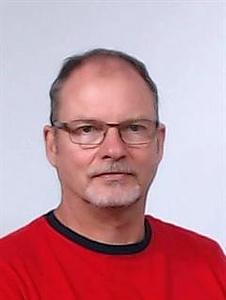
Marco Cantoni
Nationality: Swiss
EPFL CIME
MXC 132 (Bâtiment MXC)
Station 12
1015 Lausanne
+41 21 693 48 16
Office:
MXC 132
EPFL › VPA › VPA-AVP-CP › CIME › CIME-GE
Website: https://cime.epfl.ch
EPFL CIME
MXC 132 (Bâtiment MXC)
Station 12
1015 Lausanne
+41 21 693 48 16
Office:
MXC 132
EPFL › VPA › VPA-AVP-DLE › AVP-DLE-EDOC › EDMX-ENS
EPFL CIME
MXC 132 (Bâtiment MXC)
Station 12
1015 Lausanne
+41 21 693 48 16
Office:
MXC 132
EPFL › SB › SB-SPH › SPH-ENS
Website: https://sph.epfl.ch/
Expertise
Analytical (EDX, EELS) STEM
SEM: HR-SEM, SEM-STEM, EDX, EBSD
Focused Ion Beam (FIB)
Ceramics, Ferroelectrics, Superconductors
nano.. (you name it)
Mission
EDX Training: Theory of X-ray generation, Monte-Carlo Simulations of the interaction of electrons with matter, hands-on training on SEM or TEM, interpretation and processing of results
Scientific support for SEM users, Scientific support of FIB applications
Faculty IX MATHEMATICS and PHYSICS, Diploma Thesis: "Abweichungen von der ikosaedrischen Symmetrie in Al-Cu-Li Quasikristallen", Advisor: Prof. H.-U. Nissen
1989-1993, Ph.D. in Experimental Physics (certificate, 23.8.94) ETHZ
Physics Department, Laboratory of Solid State Physics, Ph. D. Thesis No. 10421, Title: "Elektronenmikroskopische Untersuchung der Realkristallstruktur epitaktischer Schichten von Supraleitern des Typs SEBa2Cu3O7-x auf (100)-SrTiO3"
Advisors: Prof. H.R. Ott, Prof. H. U. Nissen.
1994-1996,ETH Zürich,Material Science Department, Non-Metallic Materials, Prof. L. Gauckler:
Microstructure characterisation of high-tech ceramic materials by means of SEM, TEM and atomic force microscopy: superconductor thick films (Bi-2212 on Ag) and solid oxide fuel cells (ZrO2, CeO2).
1996-1998, National Institute for Research in Inorganic Materials NIRIM, Japan
Group for Special Research, Prof. S. Horiuchi: TEM of Bi-2223/Ag Tapes, Application of Imaging Plates (IP) in High Voltage TEM, Cryo-Lorentz-TEM of Superconducting Materials (Observation of Flux-Lines)
1998-2000, Ecole polytechnique fédéral de Lausanne, EPFL-CIME
Centre interdépartemental de microscopie électronique CIME, Prof. P.A. Buffat: Projet 125, PPO II (programme prioritaire optique): Characterization of materials and devices for optic and optoelectronic applications by electron microscopy.
2001-2003, Ecole polytechnique fédéral de Lausanne, EPFL STI IMX LCCeramics Laboratory, Prof. Nava Setter
Characterisation of ferroelectric materials, transmission electron microscopy of relaxor ferroelectric materials
2004, University of Geneva, Physics Department, Condensed matter Physics
Group of Prof. R. Flükiger, TEM of Multifilament Nb3Sn superconducting wires, in collaboration with EPFL-CIME
Since 1.11.04, EPFL-SB-CIME
Do not miss this
SCHILLING, A; CANTONI, M; GUO, JD; OTT, HR.
SUPERCONDUCTIVITY ABOVE 130-K IN THE HG-BA-CA-CU-O SYSTEM.
Infoscience
Teaching & PhD
Past EPFL PhD Students as codirector
Amélie Bazzoni (2014), Pierre Burdet (2012), Farhang Nabiei (2017)
Courses
3D Electron Microscopy and FIB-Nanotomography
MSE-704
The principles of 3D surface (SEM) reconstruction and its limitations will be explained. 3D volume reconstruction and tomography methods by electron microscopy (SEM/FIB and TEM) will be explained and compared with x-ray tomography.
Scanning and Analytical Transmission Electron Microscopy
MSE-735
This intensive course discusses advanced TEM techniques such as: scanning TEM; analytical TEM using EELS and EDX; aberration corrected imaging; and image simulation. It is intended for researchers who have taken the introductory TEM course MSE-637 or who have a good background in conventional TEM.
Scanning electron microscopy techniques (a)
MSE-636(a)
This intensive course is intended for researchers who envisage to use scanning electron microscopy techniques for their research or who want to understand how to interpret SEM images and analytical results presented in scientific publications.
Scanning electron microscopy techniques (b)
MSE-636(b)
This intensive course is intended for researchers who envisage to use scanning electron microscopy techniques for their research or who want to understand how to interpret SEM images and analytical results presented in scientific publications.
Transmission electron microscopy and diffraction (a)
MSE-637(a)
This intensive course is intended for researchers who envisage using transmission electron microscopy to study materials samples or to help them interpret TEM data in publications. It presents basics of TEM instrumentation, imaging, electron diffraction, specimen preparation and high-resolution TEM.
Transmission electron microscopy and diffraction (b)
MSE-637(b)
This intensive course is intended for researchers who envisage using transmission electron microscopy to study materials samples or to help them interpret TEM data in publications. It presents basics of TEM instrumentation, imaging, electron diffraction, specimen preparation and high-resolution TEM.