
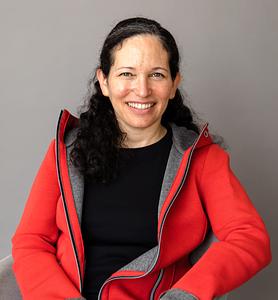
Rizlan Bernier-Latmani

EPFL ENAC IIE EML
CH A1 375 (Bâtiment CH)
Station 6
1015 Lausanne

Expertise

Geomicrobiology 
Environmental Microbiology 
Bioremediation 
Geochemistry 
Uranium biogeochemistry and  isotope geochemistry 
Iron geomicrobiology 
Gram-positive bacteria 
Deep subsurface microbes 
Nuclear waste

Mission

The focus at EML is geomicrobiology: specifically, the study of metal-microbe interactions in the subsurface. The fundamental scientific questions are centered on the metabolic activity of microorganisms and their impact on biogeochemical cycling. There are many applications to this general scientific question: e.g., bioremediation, the storage of nuclear waste in geological repositories, the mobility of contaminants in the subsurface. We also specifically probe for the role of Gram-positive bacteria, an important but understudied group of bacteria, in the subsurface.

Current Work

HIGHER EDUCATION 
Summer course: Advances in Genome Technology and Bioinformatics Course at the Marine Biology Laboratory in Woods Hole, MA. October 2005. 
Ph.D. 2001 Civil and Environmental Engineering, Stanford University, CA  (Advisor, Jim Leckie, "Biodegradation of uranyl (UO22+)-complexed citrate and implications for uranyl mobility in the subsurface")
M.S. 1995 Civil and Environmental Engineering, Stanford University, CA 
B.S. 1993 Natural Resources with Honors, Cornell University, Ithaca, NY 
PROFESSIONAL EMPLOYMENT 
2022- present Full professor, School of Architecture, Civil and Environmental Engineering, Swiss Federal Institute of Technology, Lausanne
2013-2022 Associate professor with tenure, School of Architecture, Civil and Environmental Engineering, Swiss Federal Institute of Technology, Lausanne 
2005-2013 Assistant professor tenure track, School of Architecture, Civil and Environmental Engineering, Swiss Federal Institute of Technology, Lausanne 
2001-2005 Post-Graduate Researcher, Scripps Institution of Oceanography, La Jolla, CA (PI: Brad Tebo) 
1995-2001 Graduate Research Assistant, Stanford University (Advisor: Jim Leckie) 
RESEARCH INTERESTS 
Gemicrobiology, metal-bacteria interactions, biological reduction and oxidation of metals, biological nanoparticle formation; Characterization of microbial communities in terrestrial environments; Using genomic, microscopic and spectroscopic tools to understand metal transformations by microorganisms. 
ACADEMIC HONORS 
Rotary Foundation University Professor grant, 2004. 
Swiss National Science Foundation Post-doctoral Fellowship, 2001. 
Leon B. Reynolds Memorial Scholarship in the School of Engineering at Stanford University, 1995-96. 
Graduated with Honors from Cornell University, 1993. 
BIBLIOMETRY 
http://www.researcherid.com/rid/E-4398-2011 ResearcherID: E-4398-2011

2026

Journal Articles

[1] Spatially explicit impact of enhanced leaf litter leaching on the forest soil microbiome

S. WangF. MieleP. BenettinM. FrutschiM. Cattry  et al.

Geoderma. 2026. DOI : 10.1016/j.geoderma.2026.117747.

[2] Fingerprinting Uranium Oxides with Electron Energy Loss Spectroscopy Supported by Theoretical Computations

J. CarboneB. BártováT. La GrangeK. ReinholdG. Leinders  et al.

The Journal of Physical Chemistry A. 2026. DOI : 10.1021/acs.jpca.5c07789.

[3] Sulfidation Unlocks Dual Reductive Pathways in Uranium Immobilization by Iron Sulfide

E. LiuZ. PanC. HuangY. ChenS. Wang  et al.

Environmental Science & Technology. 2026. DOI : 10.1021/acs.est.5c18167.

Conference Papers

[4] Transient oxygen-driven microbial activity at the bentonite–host rock boundary

N. JakusP. V. KulkarniD. GrolimundS. MischlerN. Diomidis  et al.

2026. EGU26, the 26th EGU General Assembly 2026, Vienna, Austria, and online, 2026-05-03 - 2026-05-08. DOI : 10.5194/egusphere-egu26-12370.

2025

Journal Articles

[5] Impact of water saturation on microbial hydrogen consumption in porous media

C. RollandE. OccelliM. AbdelouhabiN. JacqueminB. Bártová  et al.

Environmental Science & Technology. 2025. DOI : 10.1021/acs.est.5c08683.

[6] Secondary bile acid production by gut bacteria promotes Western diet-associated colorectal cancer

A. OsswaldE. WortmannD. WylensekS. KuhlsO. I. Coleman  et al.

Gut. 2025. DOI : 10.1136/gutjnl-2024-332243.

[7] Mineral Dynamics Revealed by Fe 2+ -Catalyzed Recrystallization of U-Incorporated Goethite

Q. XiaP. JoshiZ. PanM. LazarovB. Bartova  et al.

Environmental Science & Technology. 2025. DOI : 10.1021/acs.est.5c11748.

[8] Evaluating nitrate removal and travel times in a bare deciduous forest soil through a column tracer experiment

M. CattryF. MieleS. WangM. FrutschiA. Rinaldo

Catena. 2025. DOI : 10.1016/j.catena.2025.109204.

[9] High-throughput cultivation and isolation of environmental anaerobes using selectively permeable hydrogel capsules

H. SalletM. CalvoM. TitusN. JacqueminK. L. Meibom  et al.

ISME Communications. 2025. DOI : 10.1093/ismeco/ycaf117.

[10] Biosensor-aided isolation of anaerobic arsenic-methylating bacteria from soil

H. SalletL. KaiserM. TitusM. CalvoN. Jacquemin  et al.

ISME Communications. 2025. DOI : 10.1093/ismeco/ycaf081.

[11] Bile acid 7α-dehydroxylating bacteria accelerate injury-induced mucosal healing in the colon

A. JalilA. PerinoY. DongJ. ImbachC. Volet  et al.

EMBO MOLECULAR MEDICINE. 2025. DOI : 10.1038/s44321-025-00202-w.

[12] Speciation-dependent molecular mechanism of electron transfer from the c-type cytochrome MtrC to U(VI)-ligand complexes

M. MolinasK. L. MeibomA. BrownL. A. AbriataT. Prüßmann  et al.

Geo-Bio Interfaces. 2025. DOI : https://doi.org/10.1180/gbi.2024.10.

[13] Impact of oxygen release from bentonite on microbial activity, mineralogy, and steel corrosion

N. JakusP. V. KulkarniC. DreherS. BruggmannD. Grolimund  et al.

Environmental Science & Technology. 2025. DOI : 10.1021/acs.est.5c08788.

Conference Papers

[14] Biosensor-Mediated Isolation of Anaerobic Arsenic-Methylating Bacteria

H. SalletL. KaiserM. TitusM. CalvoN. Jacquemin  et al.

2025. Goldschmidt 2025 Conference, Prague, Czech Republic, 2025-07-06 - 2025-07-11. DOI : 10.7185/gold2025.28238.

[15] Trapped Air, Trapped Assumptions: Rethinking Microbial Life in Radioactive Waste Repositories

N. JakusP. V. KulkarniS. MischlerN. DiomidisR. Bernier‐Latmani

2025. Goldschmidt 2025 Conference, Prague, Czech Republic, 2025-07-06 - 2025-07-11. DOI : 10.7185/gold2025.29926.

[16] Formation of Mixed-Valence Uranium Oxide Nanowires during Magnetite-Mediated Reduction

B. BártováZ. PanP. Torruella BesaK. ReinholdJ. Carbone  et al.

2025. Goldschmidt 2025 Conference, Prague, Czech Republic, 2025-07-06 - 2025-07-11. DOI : 10.7185/gold2025.30074.

Theses

[17] High-throughput isolation of anaerobic arsenic-transforming microorganisms

H. Sallet

Lausanne, EPFL, 2025. DOI : 10.5075/epfl-thesis-11293.

Working Papers

[18] Decoupling bile acid 7α-dehydroxylation from colonization resistance to <i>Clostridioides difficile</i>

L. BeldiY. DongC. VoletD. TandonK. Filipová  et al.

2025

[19] Modulation of intestinal bile acids influences colonic mucosal responses

E. WortmannT. GrollA. StrigliK. PeukerC. Volet  et al.

2025

Datasets

[20] Supplementary movies to 'High-throughput isolation of anaerobic arsenic-transforming microorganisms' (PhD thesis by Hugo Sallet, EPFL, 2025)

H. Sallet

2025.

Teaching & PhD

PhD Students

Myriam Abdelouhabi, Jacopo Carbone, Camille Rolland, Juan Pablo Marin Jaramillo, Katharina Reinhold, Sara Orlando

Past EPFL PhD Students

Harish Veeramani, Jan Dobias, Elena Cristina Dalla Vecchia, Alexandre Bagnoud, Malgorzata Alicja Stylo, Luca Loreggian, Cornelia List, Karen Viacava, Solenne Anne Marie Marion, Niels Burzan, Margaux Molinas, Simiao Wang, Hugo Sallet

Courses

Groundwater and soil remediation

ENV-504

This course covers the essential knowledge of contaminant partitioning and techniques to monitor chemical species, physical extent of contamination and biological processes. In the second part, remediation approaches are tackled. This course represents the fundamentals of remediation.

Hands-on bioinformatics for microbial meta-omics

ENV-621

This course will train doctoral students to use bioinformatic tools to analyse amplicon and metagenomic sequences. In addition, we will also touch upon meta-transcriptomics and meta-proteomics.

Microbiology for engineers

ENV-202

"Microbiology for engineers" covers the main microbial processes that take place in the environment and in treatment systems. It presents elemental cycles that are catalyzed by microorganisms and that have a major impact on planet Earth.

Terra Epidermis

PENS-211

This transversal project aims to test around a case study chosen, the specifics of " reverse soil ." On a chose site, students will be invited to propose a single technical and architectural gesture, and synthesize their concept graphically.