
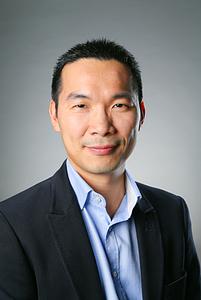
Xile Hu
EPFL SB ISIC LSCI
BCH 3305 (Batochime UNIL)
Av. F.-A. Forel 2
1015 Lausanne
+41 21 693 97 81
+41 21 693 93 01
Office:
BCH 3305
EPFL › SB › ISIC › LSCI
Website: https://lsci.epfl.ch
+41 21 693 97 81
EPFL › SB › SB-SCGC › SCGC-ENS
Website: https://www.epfl.ch/schools/sb/scgc/
Awards
Robert K. Grasselli Award for Catalysis
European Federation of Catalysis Societies (EFCATS)
2023
IUPAC-Zhejiang NHU International Award for Green Chemistry
International Union of Pure and Applied Chemistry (IUPAC)
2023
Swiss Green & Sustainable Chemistry Award
2021
Homogeneous Catalysis Award
Royal Society of Chemistry (RSC)
2019
2016 Bau Family Award in Inorganic Chemistry
2016
2017 Organic Letters Outstanding Publication of the Year Lectureship Award from the
American Chemical Society (ACS) Division of Organic Chemistry and Organic Letters
2017
Tajima Prize
International Society of Electrochemistry
2017
National Latsis Prize
Latsis foundation
2017
Werner Prize
Swiss Chemical Society
2010
Member, Academia Europaea
2020
Fellow, European Academy of Sciences
2019
Resonate Award for Sustainability Science,
Caltech
2018
Young Research Award
European Federation of Catalysis Societies
2015
Fellow, Royal Society of Chemistry
2014
European Medal for Bio-Inorganic Chemistry
2014
Organometallics Young Investigator Fellowship
American Chemical Society
2014
Rising Star, International Conference on Coordination Chemistry
2014
Chemical Society Reviews Emerging Investigator Lectureship
Royal Society of Chemistry
2013
Member of the Young Academy of Europe
2012
Extraordinary Young Scientist, World Economic Forum
2012
International Catalysis Award
International Association of Catalysis Societies
2020
Teaching & PhD
PhD Students
Ai-Lin Chan, Fangqi Di, Lasha Khutsishvili, Enora L'Hostis, Pardis Naderasli, Jiaming Tian, Ji Hee Yun
Past EPFL PhD Students
Murat Alkan (2020), Lichen Bai (2021), Guido Barzanò (2020), Gerald Bauer (2015), Nadia Yasmina Ben Sayed (2026), Jan Breitenfeld (2013), Ivan Buslov (2016), Miyeon Chang (2026), Albert Claude Jean-Pierre Daubry (2022), Thomas Clément Di Franco (2016), Laurent Liardet (2019), Runze Mao (2020), Simona Mazza (2015), Daniel Andreas Merki (2012), Carlos Gilberto Morales Guio (2016), Aliki Moysiadou (2020), Weiyan Ni (2021), Yeonji Oh (2015), Pablo Marcelo Perez Garcia (2015), Marten Leendert Ploeger (2020), Céline Jasmin Prange (2023), Peng Ren (2012), Ariana Serban (2026), Lucas-Alexandre Stern (2017), Oleg Vechorkin (2011), Heron Vrubel (2013), Xingyu Wu (2023), Xiangli Yi (2021), Fedor Zhurkin (2017)
Courses
Catalysis for energy storage
CH-421
This course covers the fundamental and applied aspects of electrocatalysis related to renewable energy conversion and storage. The focus is on catalysis for hydrogen evolution, oxygen evolution, and CO2 reduction reactions. Both homogeneous and heterogeneous catalysts are discussed.
Catalyst design for synthesis
CH-422
This course on homogeneous catalysis provide a detailed understanding of how these catalysts work at a mechanistic level and give examples of catalyst design for important reactions (hydrogenation, olefin metathesis, cross-coupling).
Frontiers in Sustainable Chemical Synthesis
CH-629
The students will become familiar with the most recent progress in sustainable synthetic chemistry, covering a broad rang of topics such as catalysis, heterocyclic chemistry, stereoselective synthesis and new synthetic tools.
Preparative chemistry II
CH-329
Advanced chemistry laboratory Admission to the TP is conditional on the successful completion of 2 of the 3 courses: CH-222 Coordination chemistry, CH-223 Organometallic chemistry, CH-233 Fonctions et réactions organiques