
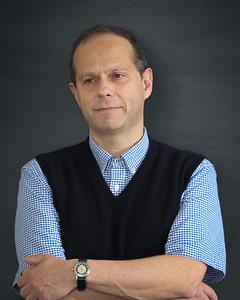
Nicola Braghieri
EPFL ENAC IA LAPIS
BP 3245 (Bâtiment BP)
Station 16
1015 Lausanne
+41 21 693 42 66
+41 21 693 93 78
Office:
BP 3245
EPFL › ENAC › IA › LAPIS
Website: https://lapis.epfl.ch
+41 21 693 42 66
EPFL › ENAC › ENAC-SAR › SAR-ENS
+41 21 693 42 66
EPFL › VPA › VPA-AVP-DLE › AVP-DLE-EDOC › EDAR-GE
Website: https://go.epfl.ch/phd-edar
Mission
The Art of Sciences laboratory (LAPIS), founded in 2013, investigates the processes of representing scientific thought through figurative tools offered by artistic disciplines. The laboratory's scientific mission is to investigate the role of implicit knowledge derived from analogical practices in the explicit automation of production processes. Therefore, research and teaching activity explores theoretical and practical implications of handcrafting specifically in the field of digital representation (image analysis, synthesis and processing), while developing strong cultural foundations and critical independent thinking. The virtual representation of architecture, city and territory is cast as a humanist discipline that questions the very nature of design and the definition of the architecture discipline. LAPIS main research axes are the following: Analog Design & Composite Practice Architecture Figuration & Digital Fine-Arts Vernacular Heritage & Systematic Surveying
After obtaining a doctorate in Theory and Methodology of Architecture, he was appointed a professor at the University of Genoa and TU Darmstadt, visiting professor at the Polytechnic of Zurich (ETH), Lausanne (EPFL) and at the SSEAU of Naples, lecturer and visiting critic in numerous European Universities - including TUH Hanover, LFH Leipzig, RWTH Aachen, Uni Stuttgart, ENSA Paris-Est MLV and Accademia d'Architettura Mendrisio.
Between 2015 and 2019, Nicola Braghieri held the direction of the Section Architecture at EPFL ENAC, where he initiated a major reform of the program, focusing on the enhancement of humanities in the "Baukultur" of architectural design (or 'culture du projet').
He is currently a member of the Board of the Doctoral School of the Architecture Faculty in Genoa, and of EDAr (école Doctorale d'Architecture et de la ville) at EPFL.
Within the latter, he deals specifically with the 'digital U-turn'.
He has written several books, and has published theoretical texts, scientific essays and critical reviews in international magazines.
He is on the editorial staff of the international magazine Casabella.
Since 2013, Nicola Braghieri has directed the Arts of Sciences Laboratory (LAPIS - Laboratoire des arts pour les sciences) at EPFL in Lausanne. The research unit, which employs about 25 researchers and teaching assistants, investigates the relationship between art and science through the study of theories and technics of representation of architecture and territory.
Its specific mission within the polytechnic community is to scrutinize the processes of visual transmission of scientific phenomena by employing figurative tools developed within artistic disciplines.
The operational structure of the laboratory is such that research and teaching are closely linked. This creates continuity and critical mass.
In 2024, four PhD students completed their theses under Braghieri's supervision, four more are in progress and three are on admission procedure.
Professionally, Nicola Braghieri is the co-founder of the architectural firm EX-M (www.ex-m.eu), based in Geneva.
In recent years, EX-M has worked on public projects of primary importance such as the Vandoeuvres Esplanade in Geneva, the water purification plant for the city of Milan, and the S16 plan for 350 low-priced social housing of Settimo Milanese. He has taken part in many competitions in Switzerland and abroad, receiving numerous mentions and realizing numerous buildings. His projects have been published in anthological volumes and in architectural review magazines such as Domus, Casabella, Area, Archi, d'Architettura, Il Giornale dell'Architettura, Werk, Traces, Bauen Wohnen, Bauwelt, Wettbewerbe Aktuell, Arkitektur and Arquitectura Viva. His work has been shown in Milan, in a solo exhibition under the patronage of the German Foreign Ministry, and in group exhibitions in Rome, Bari, Parma and Piacenza.
Teaching & PhD
PhD Students
Riccardo Acquistapace, Reda Berrada, Filippo Fanciotti, Chloé Lucie Joly-Pottuz, Emma Larcelet, Martin Peikert
Past EPFL PhD Students
Denise Bertschi (2024), Vasileios Chanis (2026), Patrick Giromini (2021), Jana Konstantinova (2021), Laura Trazic (2021)
Courses
Art and figuration
AR-104
Training in analogue and digital methods of architectural representation through the study of a small vernacular building.
Forma urbis
PENS-236
Some ancient cities are ruins, while others evolve, integrating their history into the urban fabric. These transformations create architectural palimpsests, making the city a living monument where past and present coexist and revealing captivating stories around every corner.
Introduction to building archaeology
AR-531
This course imparts the basic notions of study and analysis methods in construction archaeology. The aim is to develop students' understanding of ancient buildings, enabling them to take a more sensitive approach to architectural objects.
Studio BA5 (Braghieri)
AR-301(p)
The studio's objective is to investigate the topic of construction and recolonization within the Alpine region. The program seeks to establish a commun mixing habitat and handcraft.
Studio MA1 (Braghieri)
AR-401(z)
The studio's objective is to investigate the topic of construction and recolonization within the Alpine region. The program seeks to establish a commun mixing habitat and handcraft.
Theory and techniques of architectural figuration
AR-212
The course imparts the theoretical foundations of the history of figurative art and introduces the operative techniques of representation. The main aim is to integrate the use of digital tools into the intellectual dimension of the discipline.
UE H : Graphy
AR-433
Experiment graphic tools to represent architecture. Exercise the skill of communicating via these tools, through repeated practice of eye/hand/brain connections; a reflection stemming from the theories of representation; and by searching for inventive solutions.
UE V : Atlas alpinus
AR-523
The teaching unit will take the form of a collective research studio on the forms, materials and techniques of Alpine building culture. Bibliographical analysis, fieldwork and redrawing of built heritage will form the scientific basis for the construction of a shared atlas.