
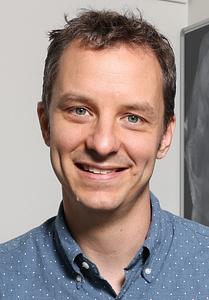
Jeremy Luterbacher

EPFL SB ISIC LPDC
CH H2 605 (Bâtiment CH)
Station 6
1015 Lausanne

EPFL CEN
BAC 104 (Château de Bassenges)
Station 5
CH-1015 Lausanne

Office: BAC 104
EPFLVPAVPA-AVP-CPCENCEN-GE

Site web: https://energycenter.epfl.ch/

Expertise

Biomass conversion
Heterogeneous catalysis
- Master's degree in Chemical Engineering obtained in 2007 at the Swiss Federal Institute of Technology, Lausanne (EPFL) (enrolled fall 2005, currently in 3rd semester). Relevant courses: Advanced Separation Processes, Advanced Chemical Reaction Engineering, Process Development and Polymer Chemistry and Macromolecular Engineering.
- Bachelor's degree in Chemistry and Chemical Engineering obtained in 2005 at the Swiss Federal Institute of Technology, Lausanne (EPFL). Relevant courses: Transport phenomena, Separation processes, Process command, Applied Energetics, Chemical Reaction Engineering, Chemical Kinetics, Quantum chemistry and Thermodynamics.
- High school Maturity completed at the Nyon High School, 2002 (major subjects: biology-chemistry, advanced math, and Latin). Maturity essay completed 12-2001 with distinction
- Secondary School certificate obtained in 1999 at the Gland secondary School, Latin-Greek section

Formation

|

2014 – 2014 Univsersity of Wisconsin-Madison

|

2012 – 2012 Cornell University

|

2010 – 2010 Cornell University

|

2007 – 2007 �cole Polytechnique F�d�rale de Lausanne

|

2005 – 2005 �cole Polytechnique F�d�rale de Lausanne

Prix et distinctions

2020

Swiss Chemical Society

2018

Swiss Chemical Society

2025

EPFL

2019

Publications représentatives

Nonenzymatic sugar production from biomass using biomass-derived ?-valerolactone

Jeremy S Luterbacher, Jacqueline M Rand, David Martin Alonso, Jeehoon Han, J Tyler Youngquist, Christos T Maravelias, Brian F Pfleger, James A Dumesic
Published in Science 343 (6168), 277-280, 2014. in

A pore?hindered diffusion and reaction model can help explain the importance of pore size distribution in enzymatic hydrolysis of biomass

Jeremy S Luterbacher, Jean?Yves Parlange, Larry P Walker
Published in Biotechnology and bioengineering 110 (1), 127-136, 2013. in

Observing and modeling BMCC degradation by commercial cellulase cocktails with fluorescently labeled Trichoderma reseii Cel7A through confocal microscopy

Jeremy S Luterbacher, Larry P Walker, Jose M Moran?Mirabal
Published in Biotechnology and bioengineering 110 (1), 108-117, 2013. in

Producing concentrated solutions of monosaccharides using biphasic CO2�H2O mixtures

Jeremy S Luterbacher, Qinyi Chew, Yuan Li, Jefferson W Tester, Larry P Walker
Published in Energy & Environmental Science 5 (5), 6990-7000, 2012. in

High?solids biphasic CO2�H2O pretreatment of lignocellulosic biomass

Jeremy S Luterbacher, Jefferson W Tester, Larry P Walker
Published in Biotechnology and bioengineering 107 (3), 451-460, 2010. in

Enseignement et PhD

Doctorant·es actuel·les

Sylvie Bertina Wigmans, Antoine Albert André Brunel, Yu-Cheng Lin, Nakul Abhay Bapat, Marie Jones, Atabay Allamyradov, Elisabetta Bonaglia, Tom Nelis, Víctor Sabanza Gil, Maxime Hedou

A dirigé les thèses EPFL de

Masoud Talebi Amiri, Jher Hau Yeap, Ydna Marie Questell-Santiago, Robert Lawrence Shahab, Benjamin Pierre Le Monnier, Yuan-Peng Du, Jessica Charlène Rohrbach, Stefania Bertella, Lorenz Perry Manker, Farzaneh Talebkeikhah, Anastasiia Komarova, Songlan Sun, Jean Behaghel de Bueren, Bartu Karakurt, Claire Laura Marion Charline Bourmaud, Zezhong Li

Cours

Chemical engineering lab & project

ChE-409

Familiarisation avec les aspects pratiques rencontrés dans le génie de la réaction chimique. Un projet de recherche est mené durant douze semaines, faisant appel à une étroite collaboration entre les groupes.

Energy systems engineering

ChE-304

Ce cours donnera aux étudiants les outils nécessaires pour analyzer et comprendre un system de production d'énergie renouvelable. Les principales technologies de production d'énergie renouvelable seront également introduites et expliquées.

Heterogeneous reaction engineering

ChE-403

Ce cours traite des aspects théoriques et pratiques des réactions hétérogènes, y compris les notions de bases de la catalyse hétérogène. Les fondamentaux sont établis, permettant la conception des réacteurs à multiphasiques.