
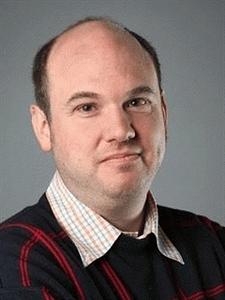
Joachim Krieger
Nationality: Swiss
EPFL SB MATH PDE
MA C1 627 (Bâtiment MA)
Station 8
1015 Lausanne
+41 21 693 54 31
+41 21 693 42 44
Office:
MA C1 627
EPFL › SB › MATH › PDE
Website: https://pde.epfl.ch
+41 21 693 54 31
EPFL › SB › SB-SMA › SMA-ENS
Website: https://sma.epfl.ch/
+41 21 693 54 31
EPFL › VPA › VPA-AVP-DLE › AVP-DLE-EDOC › EDMA-GE
Website: https://go.epfl.ch/phd-edma
Mission
In 2007 he became Tenure Track Assistant Professor at The University of Pennsylvania(UPenn) in Philadelphia, in 2008 he was named initial Calabi Assistant Professor and Sloan Fellow, and in 2009 he obtained Tenure at UPenn. In 2010 he became Associate Professor at EPFL, and was promoted to Full Professor there in 2014.
Teaching & PhD
PhD Students
Abraham Gabriel Dorsaz, Jaime Gómez Ramírez, Timon Miehling, Dylan Samuelian
Past EPFL PhD Students
Stefano Francesco Burzio (2020), Can Gao (2015), Gérôme Graf (2019), Yang Liu (2023), Katie Marsden (2024), Gaspard Ohlmann (2021), Sohrab Mirshams Shahshahani (2012)
Courses
Analysis III - Lebesgue, Fourier, vector fields
MATH-208
The course covers the following topics: -Vector calculus -Lebesgue integral -Fourier Analysis
Dispersive PDEs
MATH-478
This course will give an introduction to some aspects of nonlinear dispersive partial differential equations. These are time evolution problems that arise in many contexts in physics, such as quantum mechanics, electrodynamics, fluid motion and relativity.
Topics in dispersive PDE
MATH-659
This course assumes familiarity with beginning graduate level real analysis, complex analysis and functional analysis, and also basic harmonic analysis, as well as fundamental concepts from differential geometry.